
A Residential Wellness That Works Like Daily Infrastructure
The client came with a clear idea: Korean baths. He had seen them abroad, liked the concept, and wanted to bring it to his residential complex.
We told him it wouldn't work here. Not because the concept was wrong — but because the context was different. Four thousand apartments. Young families. People coming home late to a neighbourhood with nothing nearby.
We ran a simple financial comparison: his idea against a different model. The numbers weren't close. He looked at the table and said: forget the Korean baths. That moment became the project.
The Model
The brief shifted from "what kind of spa" to "how do people here actually live." The answer was: busy, social, time-poor, close to home by necessity. Wellness became daily infrastructure — not a destination, but something you pass through on the way through your day.
The ground floor reflects this directly. Reception works as a bar: one counter for coffee, payments, and service bookings. Around it, beauty functions are laid out as open bars — nail, face, brow — with light partitions instead of rooms. No wasted area on corridors and closed cabinets. More functions, more guests, same footprint.
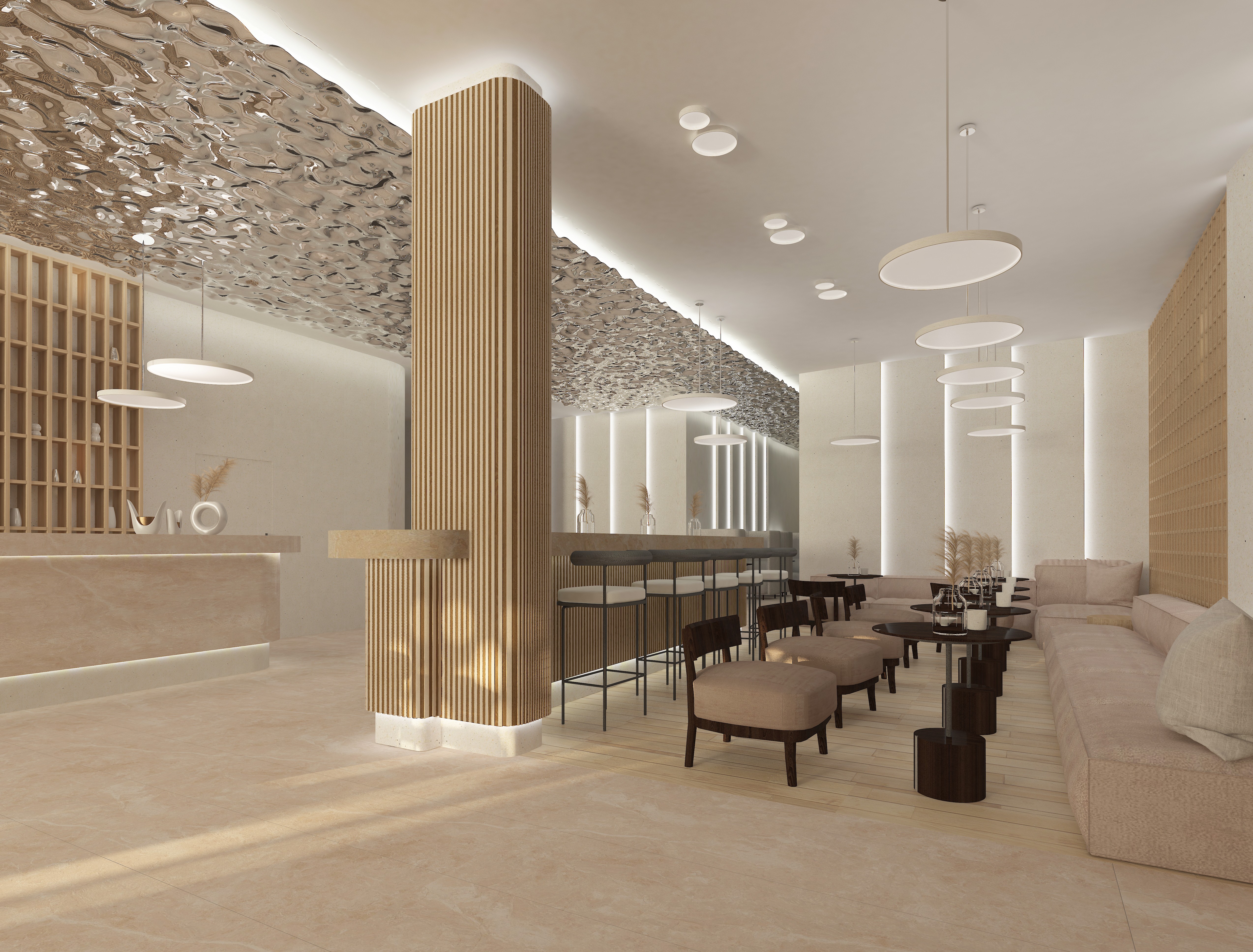
You can take a call, get a treatment, pick up food on the way out. The space is designed to be used in fragments, not visited in full.
The Upper Floor
The logic changes completely upstairs. You pass through changing rooms and enter the thermal and water zone. Slower, quieter, longer stays.
The pool is divided: swimming and hydrotherapy, different depths and temperatures. No dedicated children's pool — families can use the space, but it isn't designed around them.
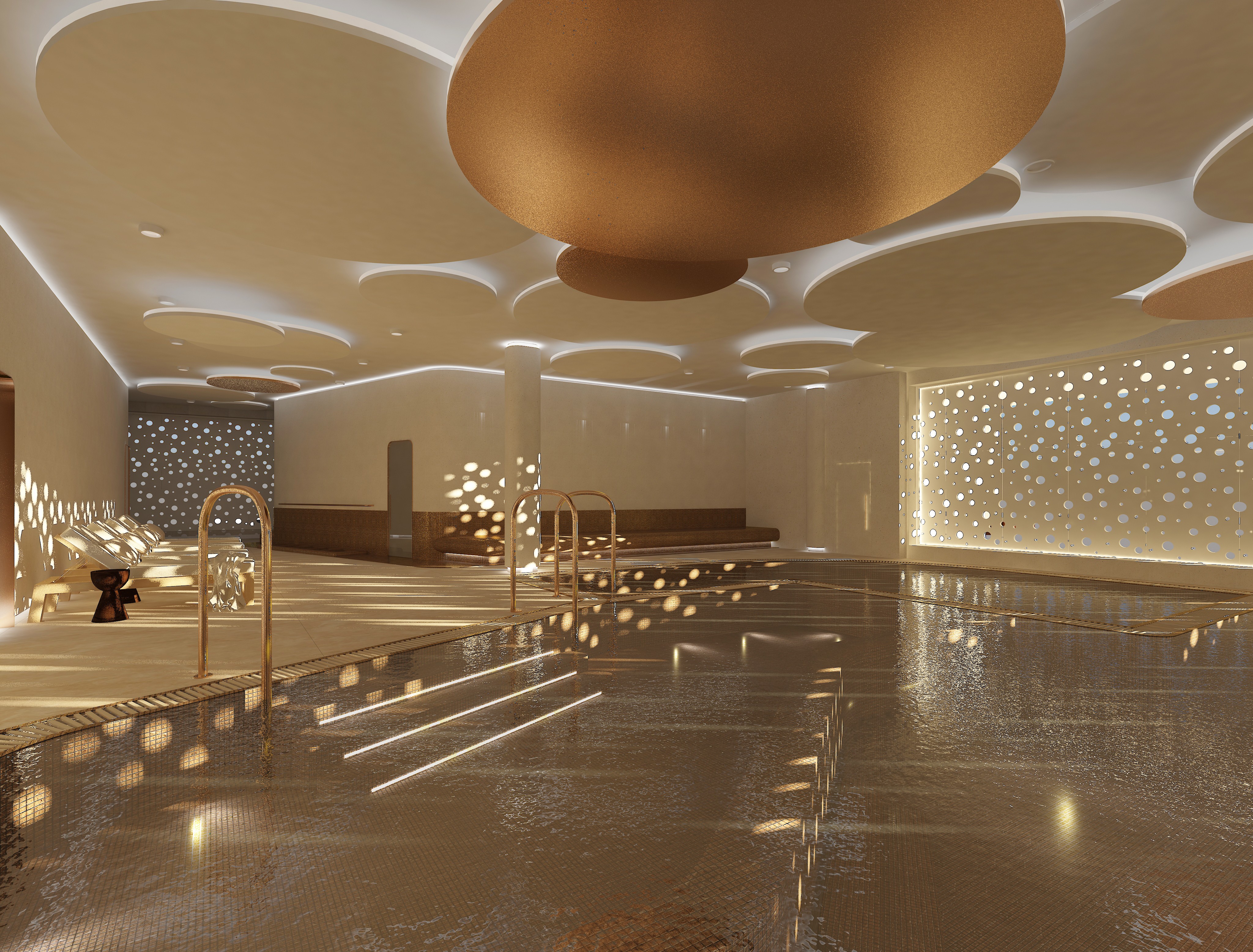
Rest options are varied: infrared seating, heated loungers, thermal cabins, a salt grotto. Each offers a different quality of pause. At one end, a raised platform brings together sauna, cold plunge, and soft seating — a relaxation zone that can hold a small private gathering without effort. Not a suite. Close enough.
Budget and Where It Shows
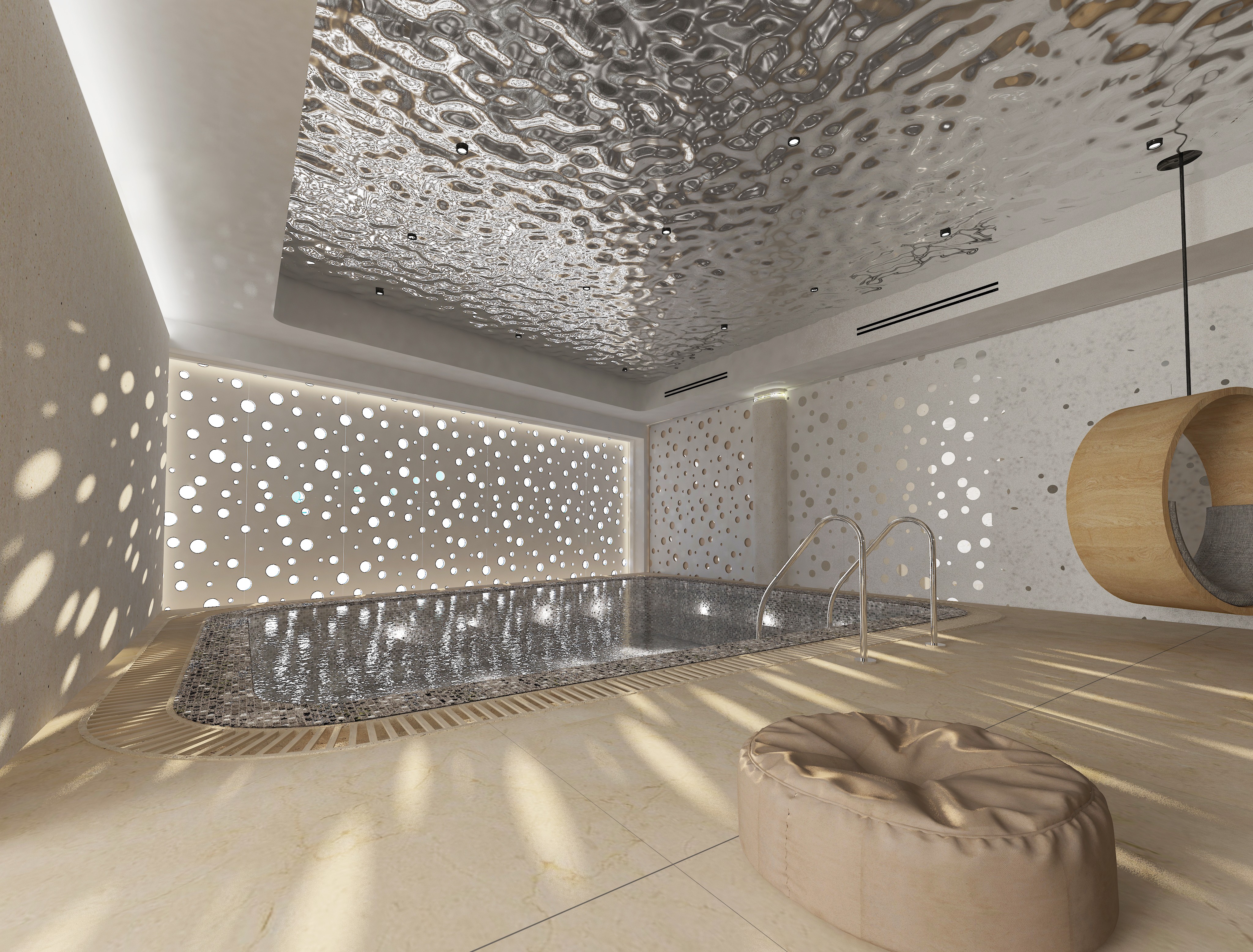
The budget was tight. The goal wasn't to lower ambition — it was to be precise about where ambition costs money and where it doesn't. The visual identity comes from light and pattern. The building's perforated facade continues inward — creating depth, shadow, and movement without expensive materials.
What This Project Is
Wellness objects are among the most complex interiors to get right. High humidity, intensive use, engineering requirements, sanitary norms — most of what matters is invisible on a render and only becomes obvious after opening.
This project sits at the intersection of that complexity and a harder commercial question: can wellness justify itself inside a residential development, at scale, for an audience that didn't ask for it? The answer required changing what wellness was.
Not a spa. Not a Korean bath. Not an amenity. A system built around how four thousand households actually spend their time — with enough functions, enough density, and enough flexibility to become part of daily life rather than an occasional visit.

Load More
