
A Cityview SPA. A Different Reason to Enter the Water
The project began with a constraint already cast in concrete: a 25-metre pool, built along the facade — too shallow for swimming standards, impossible to correct structurally. A full Olympic pool sat 100 metres away. There was no point competing with it.
So the question shifted: not how to fix the pool — but what it should do instead. The answer was a sequence of water experiences. That reframe became the project.
Key Design Decision
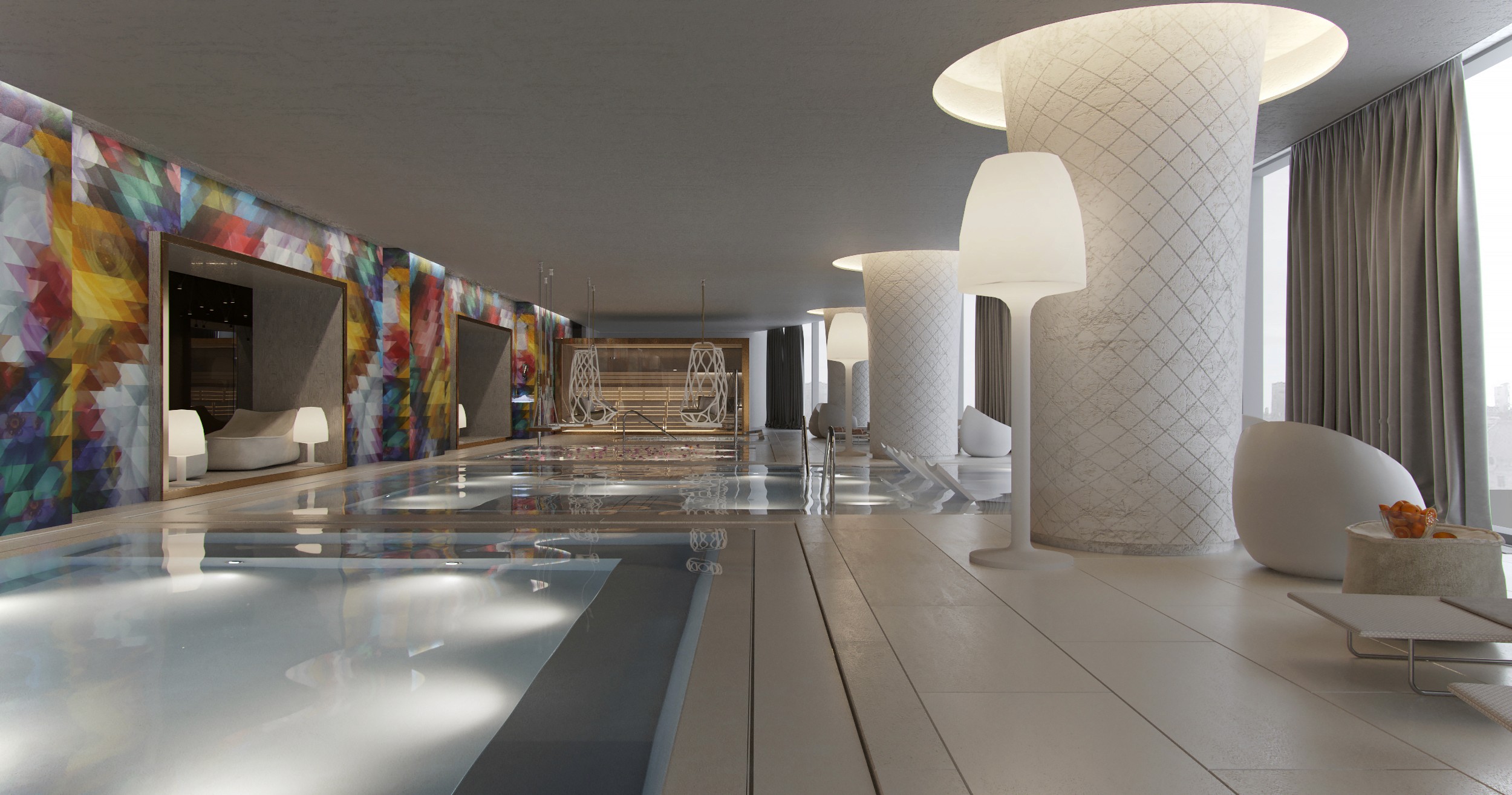
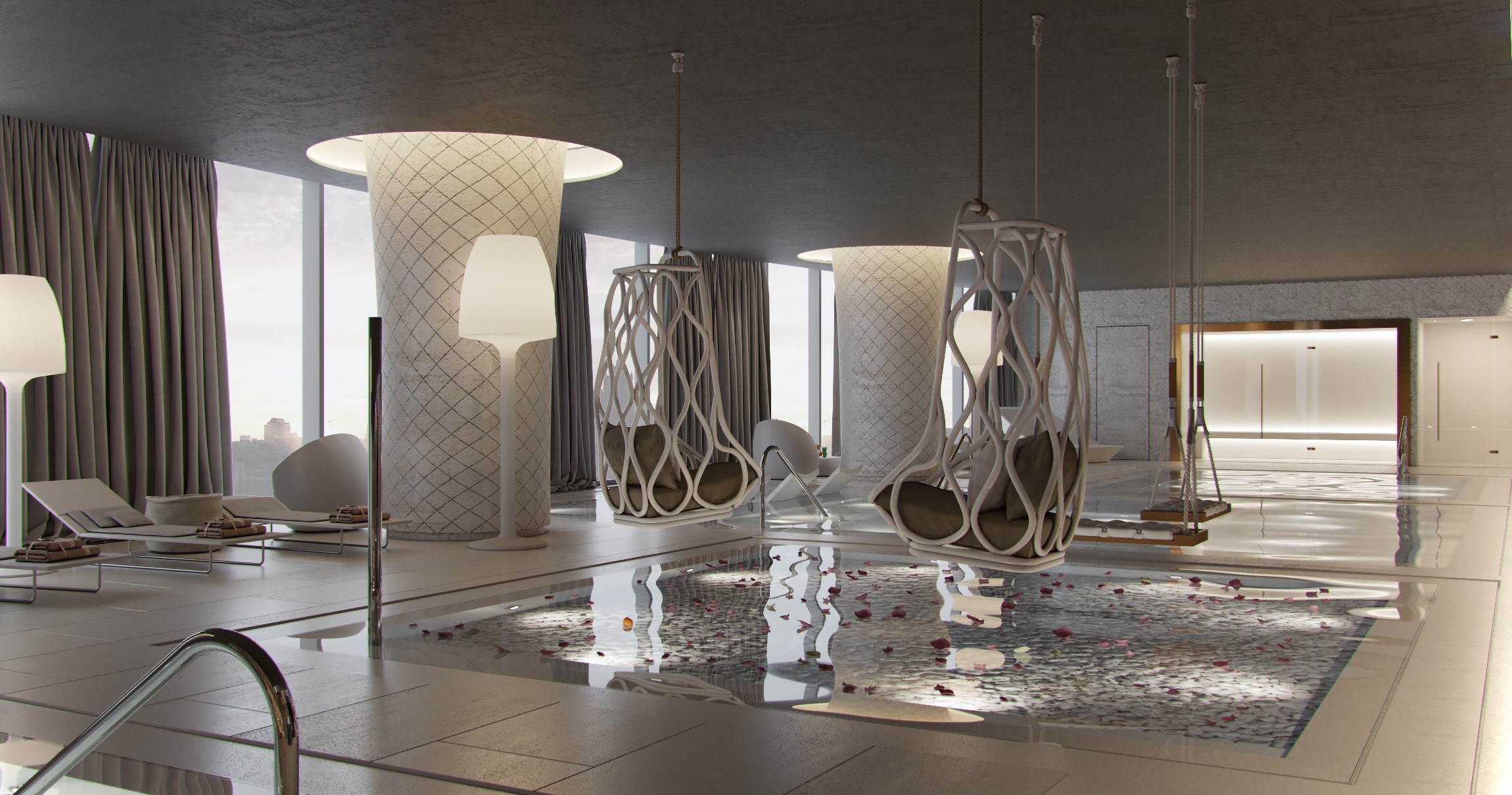
Instead of correcting the pool, we broke it. One basin became four — each with its own depth, temperature, and role: a floating salt pool for suspension, a hydrotherapy pool along the facade with submerged loungers facing the city, a shallow pebble pool with suspended cocoons above the water, and a cold plunge fed with ice as both ritual and contrast.
Nothing was demolished. Concrete was added within the existing shell — adjusting depth, dividing volume from the inside. Each basin found its working depth within what the original structure allowed. This solved three problems at once: a technical error that couldn't be repaired, the absence of any differentiation from the facility next door, and a fundamental mismatch between "sport" and "wellness"
Flow and Structure
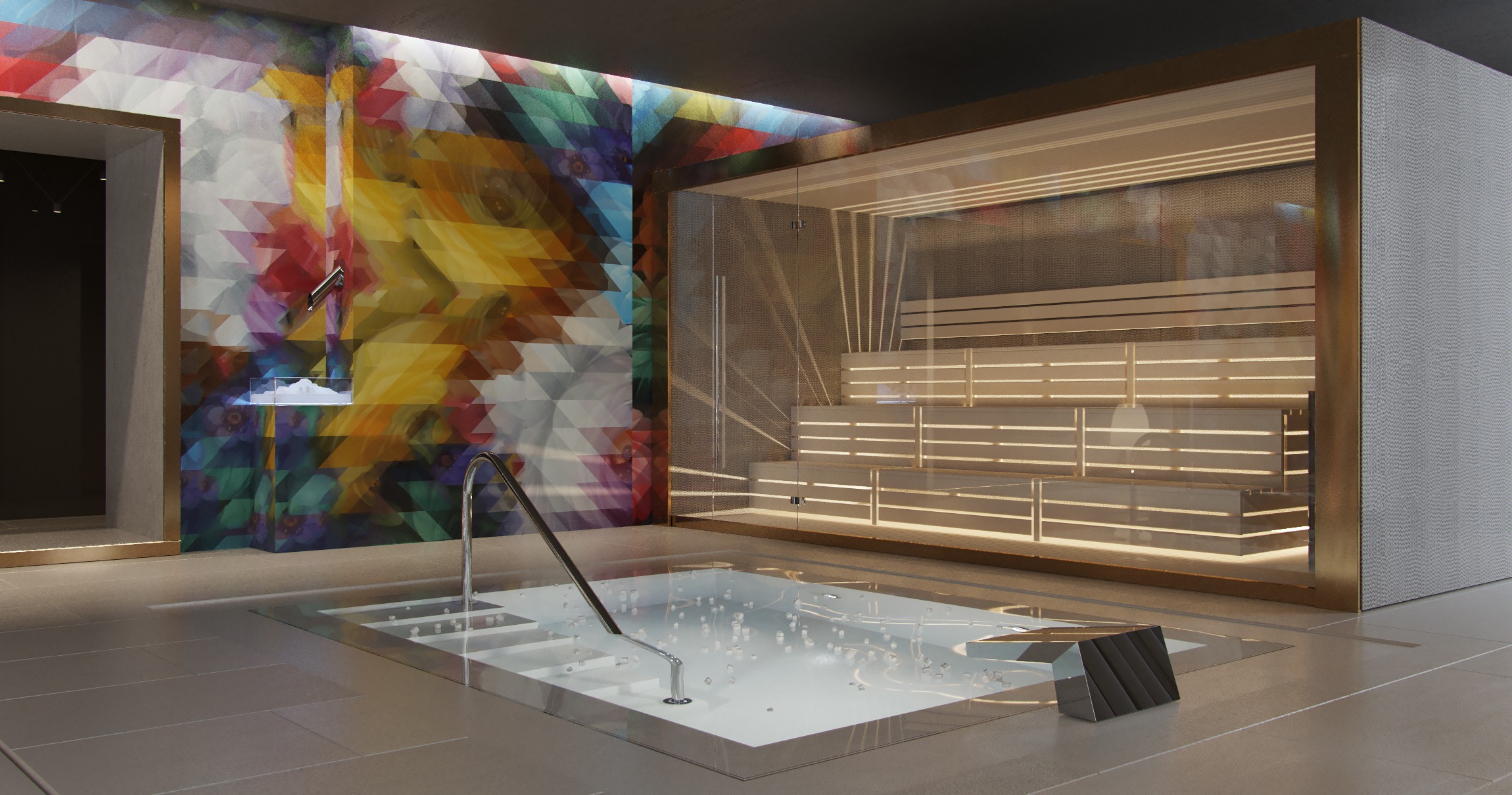
The space is organised as a continuous forward movement. You don't circulate — you progress.
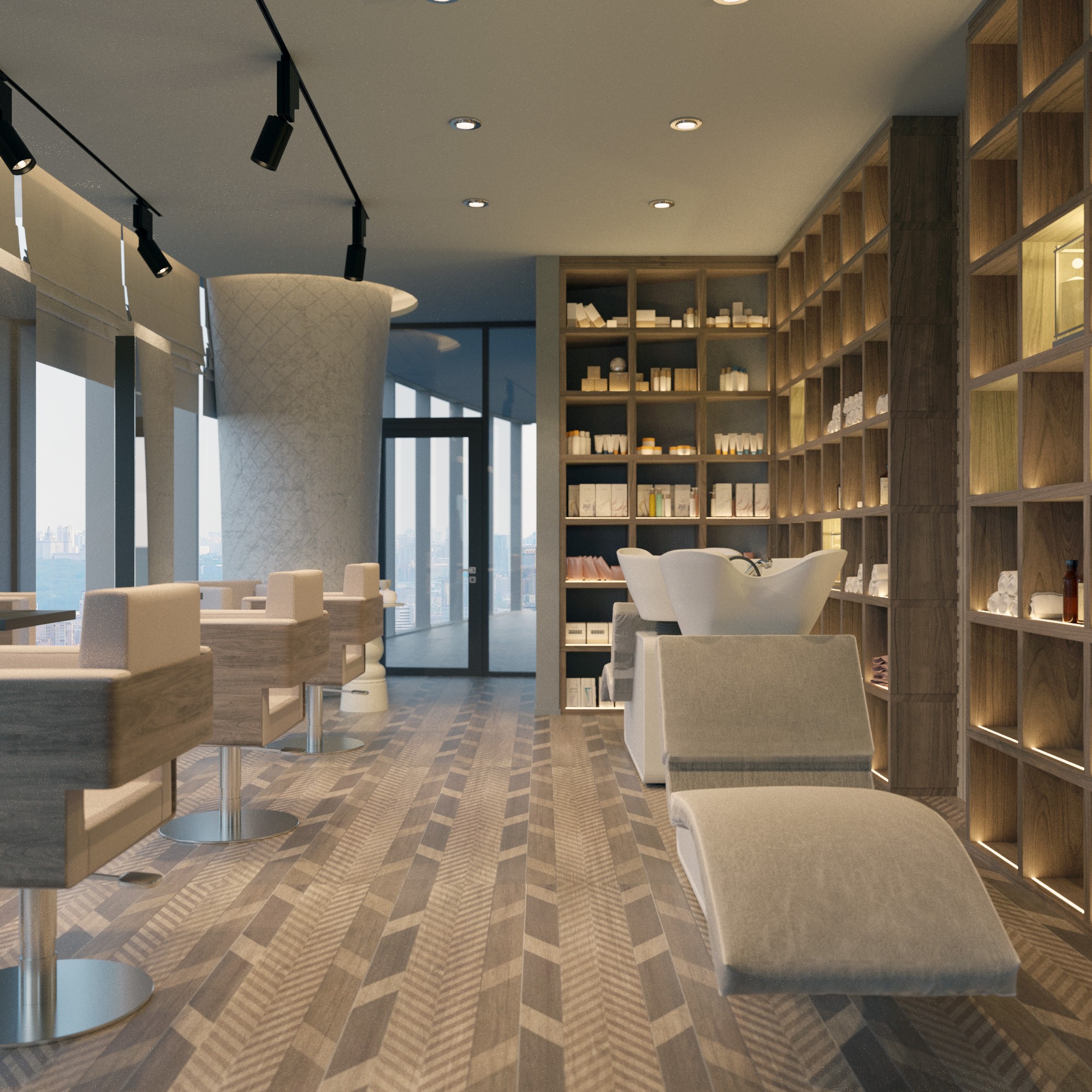
Entry leads to reception. Fitness sits to the right, accessible 24/7 without opening the full spa. Changing rooms are designed as pass-through: you enter from the outside, exit directly into the wet zone. Then the aqua area. Then treatment rooms. No return paths. No backtracking.
This wasn't only a spatial solution — the building made it necessary. A circular glass floor plate with a central core split the plan in two, leaving a single narrow connection point between halves. Instead of fighting the geometry, the layout used it — the constraint became the logic of the sequence.
Atmosphere
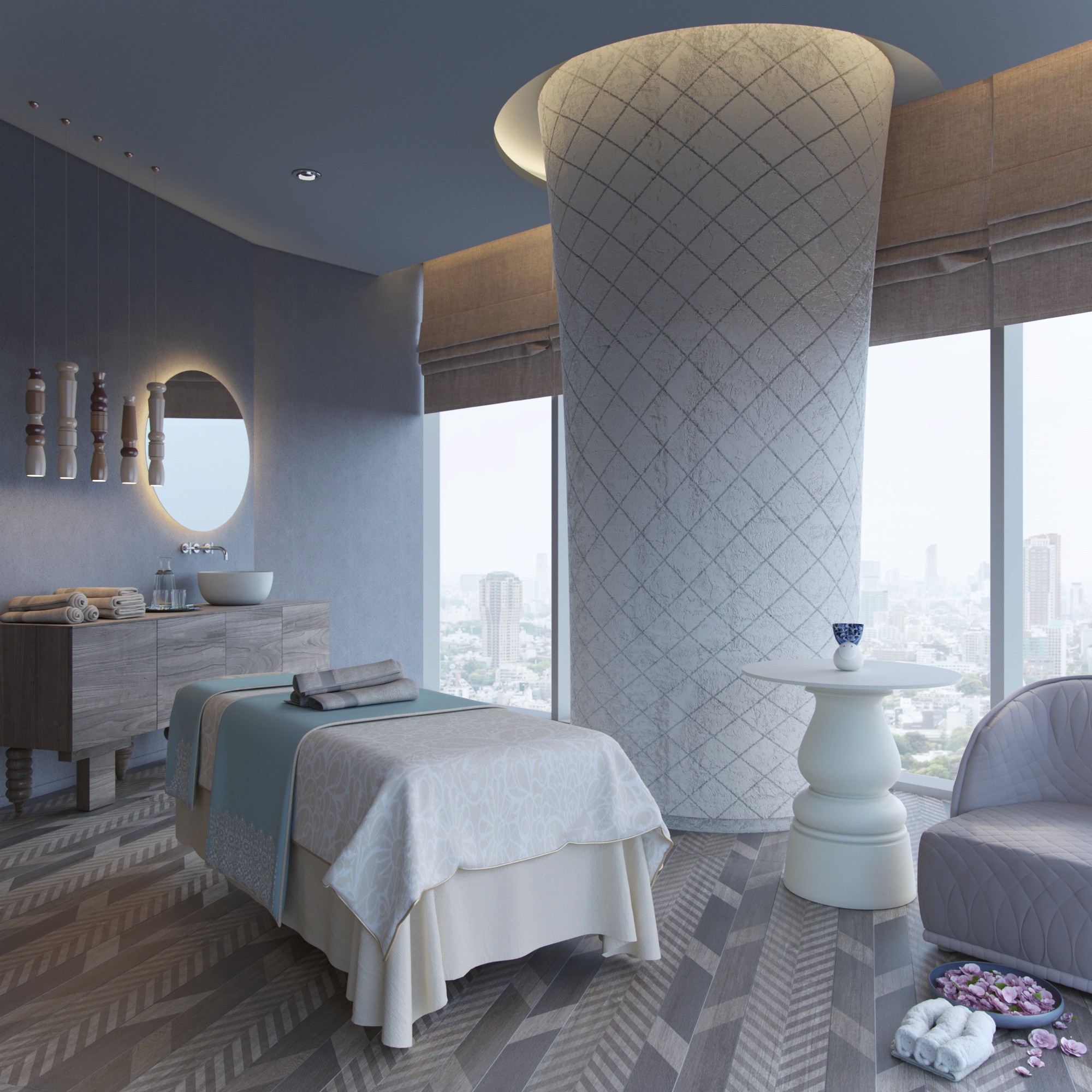
The entire perimeter is glass. For a hotel, this is an asset. For a spa, it introduces real friction: heat, exposure, condensation from warm water against a cold facade in winter. Rather than fighting it, the facade became the main stage. Water zones, rest areas, and viewpoints are positioned along it. Loungers sit directly in the pools, facing the city.
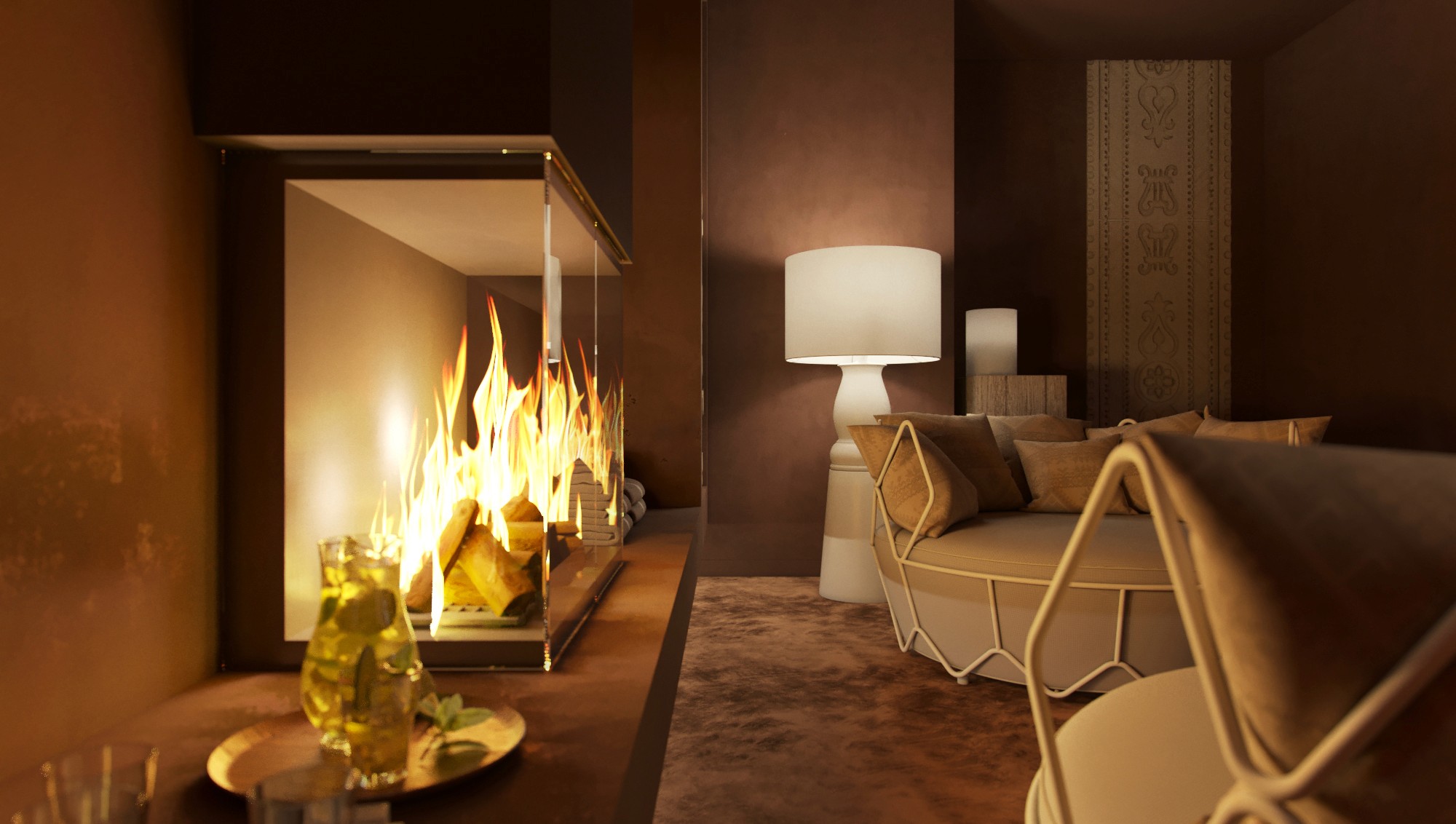
The contrast comes from what's at the other end. A dark, windowless relaxation room sits deep in the plan — deliberately cut off from the panoramic facade that dominates everywhere else. Soft surfaces, low light, a fireplace. During design, the client questioned it: the atmosphere read as ambiguous, not clearly wellness. Some visual elements were adjusted, but the principle — enclosure, darkness, warmth — stayed. It became the final point in the sequence. After the city, after the water, this is where the experience closes.
Not every space offers a view. Some offer release from it.
Atmosphere
This is not a spa organised around a single feature. It's a system built from constraints — an unfixable pool, a divided floor plate, a glass perimeter that cuts both ways — where each limitation forced a decision, and the decisions together produced something coherent.
Not a place for swimming. Not a sequence of rooms. A progression of states.

Load More
